

Active Release Technique in the Hamptons
A certified soft tissue system that treats the adhesion itself: precise manual tension held in place while you move the tissue underneath it.
Pressure, then movement, on the exact spot that is stuck.
Active Release Technique is a certified soft tissue system. Your therapist palpates until the restricted band is located, holds precise tension on it, then takes you through a specific movement that lengthens that tissue underneath the contact. You supply the motion, which is why it is called active. Think of deep soft tissue work crossed with a mobilization, aimed at muscle, tendon, ligament, fascia and the nerves that travel between them.
The target is adhesion. Tissue that has been strained, overused or cut heals with scar and fibrosis, and that binds layers which are supposed to slide across each other. Bound layers pull on their attachments, cut range short, and can tether a nerve, which is why an old hamstring strain sometimes turns up as numbness rather than tightness.
What it gives you back is glide. Because your feedback on what each contact reproduces guides where the pressure goes, your therapist ends up treating the tissue you can actually feel rather than the one the diagnosis predicted. Our therapists hold formal ART certification.
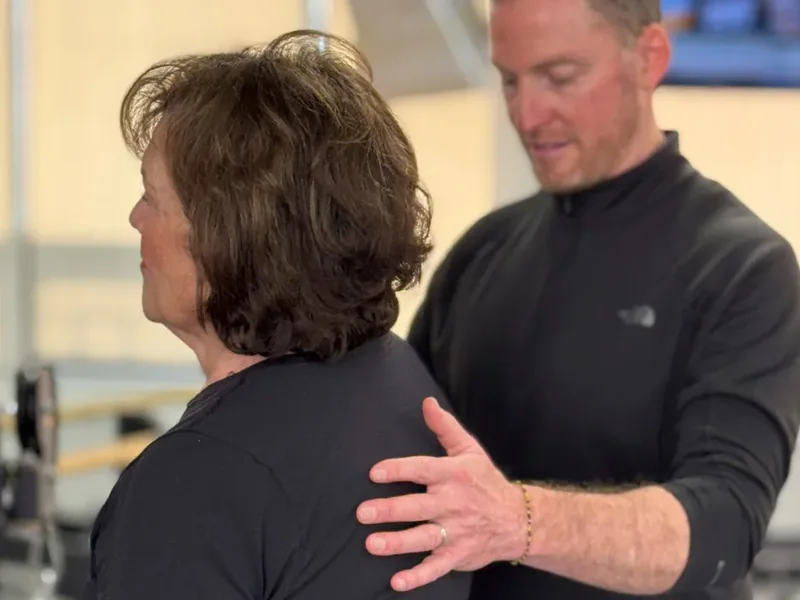
Who ART helps.
Restriction is the common thread. Age is not: we treat people in their teens and people in their eighties.
Old Injuries That Never Cleared
A strain or sprain from years ago that still limits range or aches whenever you push it.
Scar Tissue After Surgery
Restriction around an incision or a repair that holds motion back even after the joint itself is cleared.
Nerve Symptoms From Tight Tissue
Tingling, burning or numbness where a nerve is being compressed as it passes through muscle or fascia.
Golfers & Racquet Players
Elbow, forearm and shoulder tissue that has stopped tolerating repeated swings.
Runners
Calf, hamstring, lateral thigh and plantar tissue that flares at the same mileage every training block.
Plateaued Athletes
Lifters and weekend warriors whose range, not their strength, is the thing capping their training.
What ART actually delivers.
Four things, and an honest answer about fit.
Range That Holds
Motion returns because a restriction was released, not because the tissue was warmed up for an hour.
Quieter Nerve Symptoms
Tingling and burning tend to ease once the tissue tethering the nerve is freed.
Less Pain At End Range
The last few degrees, which is where most people actually get stopped, become usable again.
A Clear Answer On Fit
ART is not the right tool for every problem. You find out quickly whether it is right for yours.
Questions about active release technique.
01 / What does Active Release Technique feel like?
02 / How is ART different from stretching or a deep massage?
03 / Do I need a referral, and is it covered?
What our patients say.
"Seth is practically a miracle worker! I am in less pain and have better range of motion than I have had in decades! Literally. This far exceeds my expectations!"Lynne J. · Long-standing pain
Schedule Your Appointment
No referral needed in New York. Same-week appointments available at both locations.
Your first visit is a full one-on-one evaluation with a licensed physical therapist: come in, tell us everything, and leave with a plan.
You’re all set.
We’ll reach out within one business day to confirm your appointment. If you need to speak with us sooner, call us directly.