

Manual Therapy in Speonk, NY
Skilled hands on the one joint or tissue that is actually restricted, chosen after an examination rather than applied to everybody the same way.
Four techniques, aimed at one specific problem.
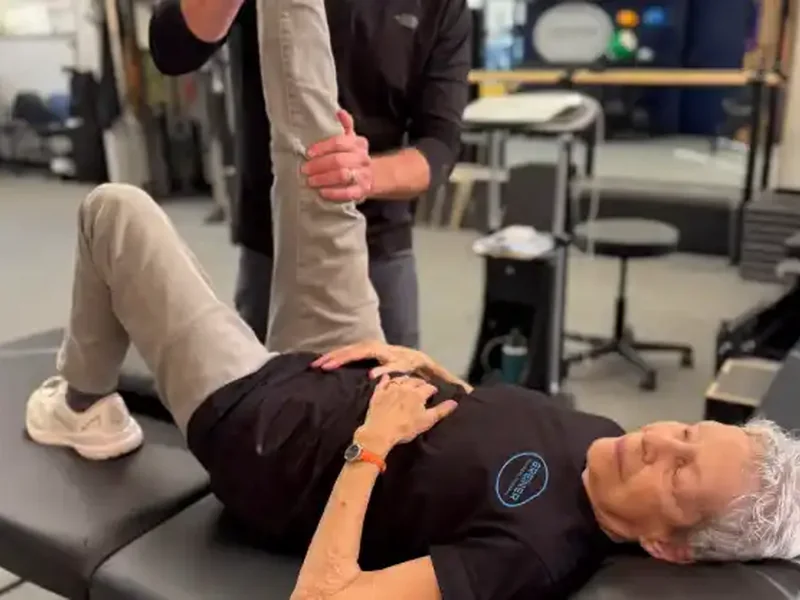
Manual therapy is treatment delivered by your therapist’s hands to a structure that has been identified first. Four techniques do most of the work: joint mobilization, low-velocity rhythmic movement that restores glide at a stiff joint; muscle energy technique, using your own contraction against resistance to reposition and lengthen; myofascial release, sustained pressure into restricted fascia; and trigger point work, isolating and quieting a taut band inside a muscle.
What makes it therapy rather than a rubdown is the assessment in front of it. Your therapist tests segment by segment to find the tissue that reproduces your symptom, treats that tissue, then retests inside the same visit. If the retest does not change, the technique changes.
For you that means a stiff shoulder gets its capsule addressed instead of the whole arm getting heat, and the change you feel on the table gets locked in with exercise before you leave. Members of the team hold a post-doctorate certification in orthopedic manual therapy.
Who manual therapy helps.
Four presentations that respond to hands before they respond to anything else.
Chronic Back & Neck Pain
Pain that settles for a week and comes back, usually because a stiff segment above or below it never got addressed.
Post-Surgical Stiffness
Scar tissue and capsular restriction after a replacement or repair, when motion has stalled short of where it should be.
Tendon Pain That Lingers
Tendinitis and tendinosis at the elbow, hip, knee or achilles that rest keeps quieting and activity keeps waking up.
Headaches & Jaw Pain
Headache patterns and jaw symptoms driven by the mechanics of the upper neck rather than by the head itself.
What changes.
Measured on the movement you complained about, not on a chart of averages.
Motion You Can Use
Rotation to look over your shoulder while reversing, extension to reach a top shelf, not degrees on a page.
Less Pain In The Movement That Hurt
Progress is tracked on the specific motion that brought you in.
A Reason, Not A Guess
You find out which structure is involved and what made it that way.
Something To Do At Home
Self-treatment you can apply between visits, so relief does not wait on the next appointment.
Questions about manual therapy.
01 / How is manual therapy different from a massage?
02 / Does it hurt?
03 / Do I need a referral, and how does insurance work?
What our patients say.
"Anthony Fuentes at Greiner is hands down one of the best physical therapists around! Professional, friendly, & super effective at helping you recover and build strength safely."Toni C. · Google review
Schedule Your Appointment
No referral needed in New York. Same-week appointments available at both locations.
Your first visit is a full one-on-one evaluation with a licensed physical therapist: come in, tell us everything, and leave with a plan.
You’re all set.
We’ll reach out within one business day to confirm your appointment. If you need to speak with us sooner, call us directly.