

Running Rehab in the Hamptons
We settle the injury, then we deal with the cadence, the mileage jump or the weak hip that produced it. Otherwise you meet it again next season.
Three things cause running injuries. We check all three.
Running rehab is injury care plus the two things that produced the injury. First the tissue gets settled with hands-on treatment and a temporary change to your running. Then your therapist looks at gait, at load and at capacity, because nearly every running injury traces back to one of those three, and treating the sore spot alone is why it returns at the same point in every training block.
Gait means how you actually run: cadence, stride length, where the foot lands relative to your hips, how much the pelvis drops, what the trunk does. Small cadence and contact changes redistribute force away from the structure that is complaining. Load means the arithmetic of your training: how fast mileage or intensity climbed, how the hard days sit next to each other, what surface, what shoes.
Capacity is the one runners skip. Hips that cannot control the pelvis over a single leg, and a calf and achilles complex that has never been loaded heavily enough for the thousands of contacts a week you ask of it. Building that capacity is what lets you absorb the training you want to do, and it is usually the difference between a runner who gets over an injury and a runner who stops collecting them.
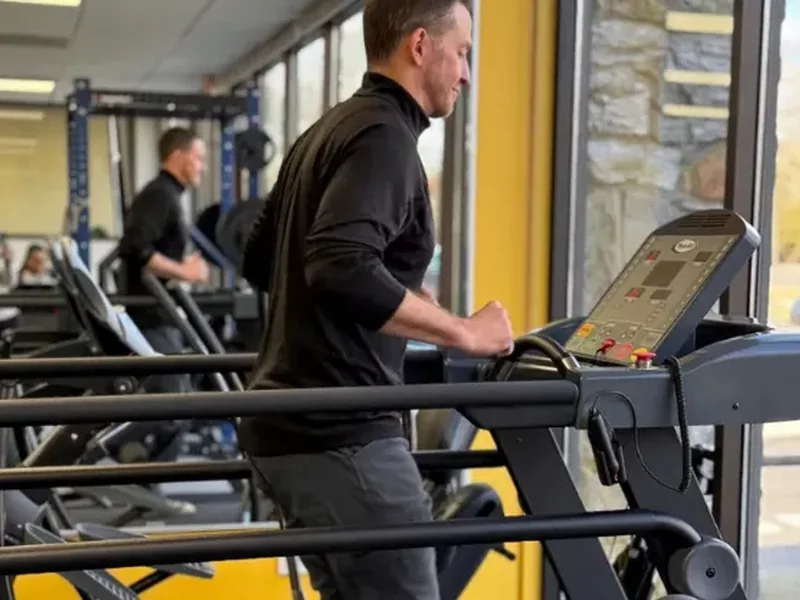
Who we see running.
Weekend runners through competitive athletes, mostly with a problem they have had before.
Runners With A Recurring Injury
The same shin, knee, calf or foot problem that shows up at the same mileage every single year.
Achilles And Calf Problems
Tissue that is sore for the first mile, quiet in the middle, and worse the next morning.
Knee And Hip Pain On The Run
Pain that starts partway into a run and tracks with hills, pace or downhill sections.
Foot And Shin Complaints
Plantar pain and shin symptoms that arrived after a training jump or a change of shoe.
What you finish with.
A return plan, two gait cues, and legs that can take the training.
Back To Running, Progressively
A written return plan with mileage and intensity steps, not a discharge and good luck.
Gait Changes That Stick
One or two cues you can actually hold, chosen to offload the tissue that was hurting.
Calves And Hips That Can Take It
Measured strength in the two areas that decide whether the injury comes back.
A Training Plan That Makes Sense
You understand the load errors that put you here, so you can spot the next one yourself.
Questions about running rehab.
01 / Do I have to stop running?
02 / Will you change my running form?
03 / How often will I come in, and do I need a referral?
What our patients say.
"After 6 months of him and his teammate Anthony I am feeling confident to go on with my life. I am able to run without pain."Greiner patient · Return to running
Schedule Your Appointment
No referral needed in New York. Same-week appointments available at both locations.
Your first visit is a full one-on-one evaluation with a licensed physical therapist: come in, tell us everything, and leave with a plan.
You’re all set.
We’ll reach out within one business day to confirm your appointment. If you need to speak with us sooner, call us directly.