

Chronic Pain Treatment in the Hamptons
You have been told the scan looks fine and to manage it. Pain that has lasted this long is a nervous system problem as much as a tissue problem, and both respond to the right work.
After long enough, pain stops being a report on the tissue and becomes a habit in the system.
Pain is an alarm, and alarms can get miscalibrated. When something hurts for months past the point the tissue should have healed, the nervous system carrying that signal gets better at carrying it. The threshold drops. Movements that never used to hurt start to. It becomes possible to be in real, physical, measurable pain without a fresh injury anywhere, which is the part nobody explains and the part that makes people feel they are not believed.
Around that, a physical decline sets in that is entirely real. You stop the movements that hurt, so you lose range. You do less, so you lose strength and conditioning. You brace and guard all day, so muscles stay switched on and tired. Sleep breaks down, which lowers pain tolerance further. Every one of those is trainable, which is precisely why physical therapy still works when the pain has been there for years.
What we do not do is dismiss it, hand you a sheet, or tell you it is in your head. What we do is find what your system will currently tolerate, work inside that, and then move the ceiling up week after week until your life is bigger than your pain is.
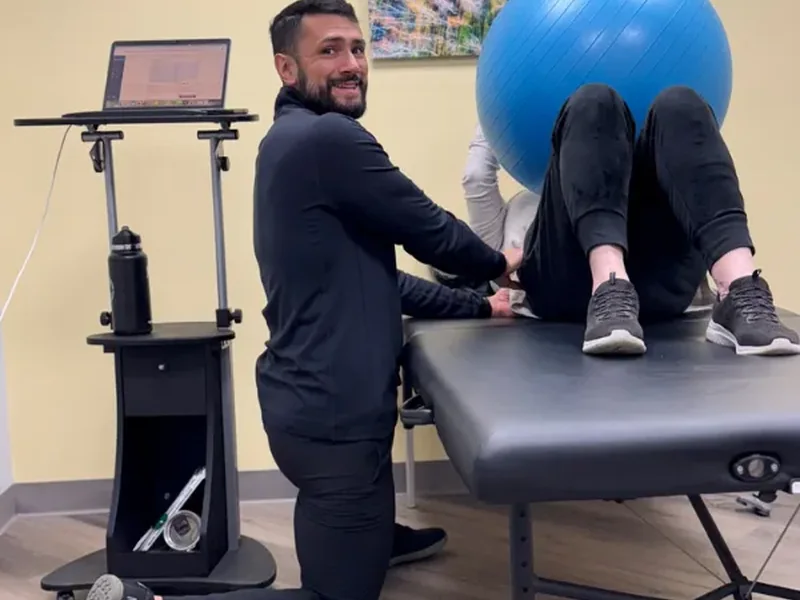
What living with persistent pain actually looks like.
If most of this list is familiar, you are not describing a weak constitution. You are describing a sensitised system.
It never fully goes away
There are better days and worse days, but there is no longer a day with nothing there at all.
Flares that make no sense
A light activity sets you back for days while something harder passes without incident.
Sensitivity out of proportion
Light touch, cold weather, clothing pressure or a small movement provokes far more than it should.
A shrinking list of movements
You have quietly stopped bending, reaching, lifting or walking that far, and the range is now gone.
Poor sleep and no reserve
You wake through the night, and by the afternoon you have nothing left for the things you care about.
The mental cost
Frustration at being processed by the system, and the fatigue of explaining yourself to one more provider.
How we treat pain that has been there a long time.
The first visit is a long conversation and a thorough examination, in that order. We want the whole history: what started it, what has been tried, what made things worse, what you have given up, and what you would do first if the pain dropped by half. Then we test movement, strength, mobility and tolerance so we know exactly where the ceiling currently is.
The plan usually pairs hands-on work with graded loading. Manual therapy and massage therapy reduce the guarding and give you a window of easier movement. Inside that window we introduce movement you can tolerate, then add to it in doses small enough that your system does not sound the alarm. Strength and conditioning follow, because a body with more capacity has a higher pain threshold, and pacing strategies come with it so the good weeks stop ending in a crash.
You get the same therapist, for the full session, every visit. That matters more here than anywhere else: a persistent pain problem takes someone who remembers what you did last Tuesday and how you felt on Thursday, not whoever is free.
No referral needed in New York for up to 30 days or 10 visits. In network with Medicare and Medicare Advantage, out of network with most other plans, and we submit claims on your behalf. Same-week appointments are usually available at both locations.
Questions about chronic pain.
01 / Can chronic pain actually go away?
02 / Do I need a referral, and will insurance help?
03 / I have already done physical therapy and it did not work. Why would this be different?
04 / How long before I notice anything?
What our patients say.
"Seth is practically a miracle worker! I am in less pain and have better range of motion than I have had in decades! Literally. This far exceeds my expectations!"Lynne J. · Long-standing pain
Schedule Your Appointment
No referral needed in New York. Same-week appointments available at both locations.
Your first visit is a full one-on-one evaluation with a licensed physical therapist: come in, tell us everything, and leave with a plan.
You’re all set.
We’ll reach out within one business day to confirm your appointment. If you need to speak with us sooner, call us directly.