

Osteoporosis Physical Therapy in Speonk, NY
A scan came back low and the advice was to be careful. Careful is not a plan. Bone gets stronger the same way muscle does, from load, applied by someone who knows which loads to avoid.
Bone is living tissue that responds to being asked for something.
Osteoporosis is usually explained as a bone density number, which makes it sound like a fixed verdict. It is closer to a use-it story. Bone remodels constantly in response to the forces put through it, and when the forces get light, the remodelling follows. Decades of avoiding load, plus the hormonal changes around menopause, are why the number drifts down. The number is the symptom of a signal that stopped arriving.
The instinct after a diagnosis is to protect. Stop lifting, stop impact, move gently. It feels responsible, and it accelerates exactly what you are trying to prevent, because now the bone is getting even less stimulus and the muscle around it is shrinking too. Meanwhile the actual event you are afraid of, a hip or spine fracture, almost always requires a fall to happen. Being weaker and less steady makes that fall more likely, not less.
So the plan runs on two tracks at once. Load the skeleton hard enough to matter, in the positions that are safe, while training the balance and strength that keep you off the floor in the first place. That takes supervision and precision, which is why every session here is one on one with a licensed physical therapist.
Osteoporosis is quiet until it is not.
There is often nothing to feel, which is why what you notice tends to be structural rather than painful.
A fracture from something small
A wrist, rib or vertebra broken by a low fall or a heavy lift is the classic first sign.
Height loss and a rounding upper back
Gradual forward posture, often from small vertebral compression fractures that were never diagnosed.
Mid-back pain that arrived without an injury
New thoracic pain in an older adult with low bone density deserves a real examination, not reassurance.
Unsteadiness and near misses
Catching yourself on furniture, or slowing down on stairs, both of which raise fracture risk directly.
Strength that has drifted away
Sit-to-stand and carrying groceries got harder, which is muscle and bone losing capacity together.
A scan result and no instructions
You were told your density is low and to take calcium. Nobody told you what to lift or what to stop doing.
Progressive loading, done properly, with the risky movements off the table.
We start with a full evaluation: posture and spinal mobility, hip and leg strength, sit-to-stand and walking capacity, and balance tested until it fails so we know your real margin. We also go through your history for prior fractures, medications and any restrictions your physician has set, because those shape what we load and how fast.
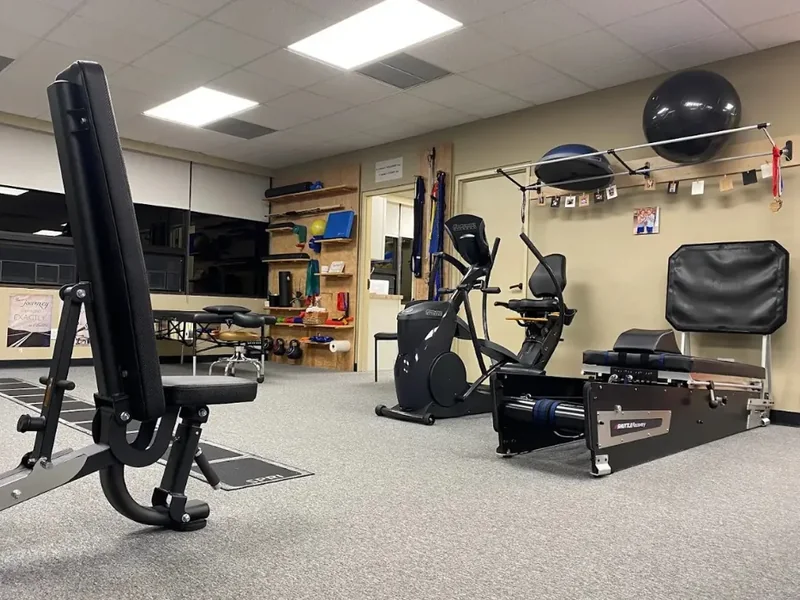
Then we load you. Resistance training for the hips and spine, weight-bearing work, and back extensor and postural strengthening, progressed with the same principles we use with our lifters. This practice runs powerlifting-style coaching as rehab, which is unusual in a clinic and genuinely relevant here, because heavy and well-supervised is precisely the stimulus bone responds to. What we take out is loaded spinal flexion and rotation: no crunches, no toe touches with a weight, no twisting under load, no rounded-back lifting. Every session is one on one, so form is corrected in the set, not after it.
No referral needed in New York for up to 30 days or 10 visits. In network with Medicare and Medicare Advantage, out of network with most other plans, and we submit claims on your behalf. Same-week appointments are usually available at both locations.
Questions about osteoporosis.
01 / Is lifting weights safe with osteoporosis?
02 / Do I need a referral, and will insurance cover this?
03 / I have already had a compression fracture. Is it too late for this?
04 / How often would I come in?
What our patients say.
"Highly recommend. The staff is professional and friendly. Every therapist provides full attention and focus on improvement during entire session."Diane H. · Google review
Schedule Your Appointment
No referral needed in New York. Same-week appointments available at both locations.
Your first visit is a full one-on-one evaluation with a licensed physical therapist: come in, tell us everything, and leave with a plan.
You’re all set.
We’ll reach out within one business day to confirm your appointment. If you need to speak with us sooner, call us directly.