

Weightlifting Injury Rehab in Speonk, NY
You do not want to be told to stop lifting. You want to know which part of your bench, your squat or your deadlift is doing this, and what to change. That is a different appointment, and it is the one we run.
The bar is not the problem. What happens at rep eight is.
Lifting is one of the safest things you can do to a body, right up until three things stack up: load that climbed faster than tissue adapted, technique that breaks down under fatigue, and a capacity imbalance somewhere in the chain. Get all three and the injury is not random. It shows up in a predictable place for a predictable lift, and it tends to happen at the same point in the same set.
That is why lifting injuries are the most diagnosable injuries we see. Shoulder pain that comes from bench and overhead press usually involves how the shoulder blade sets up and how much cuff capacity is behind the press. Low back pain that comes from deadlift and squat usually involves bracing that fails as the set goes on, not a fragile spine. Knee pain in squats and leg press is usually about where the load sits and what the quad and hip can produce. Medial elbow and biceps tendon pain usually tracks a jump in pulling volume.
Which means the useful question is never whether to lift. It is which rep of which lift is producing this, and what has to change in technique, in programming or in capacity so it stops. Answering that takes someone watching you lift, not someone handing you a sheet of shoulder exercises.
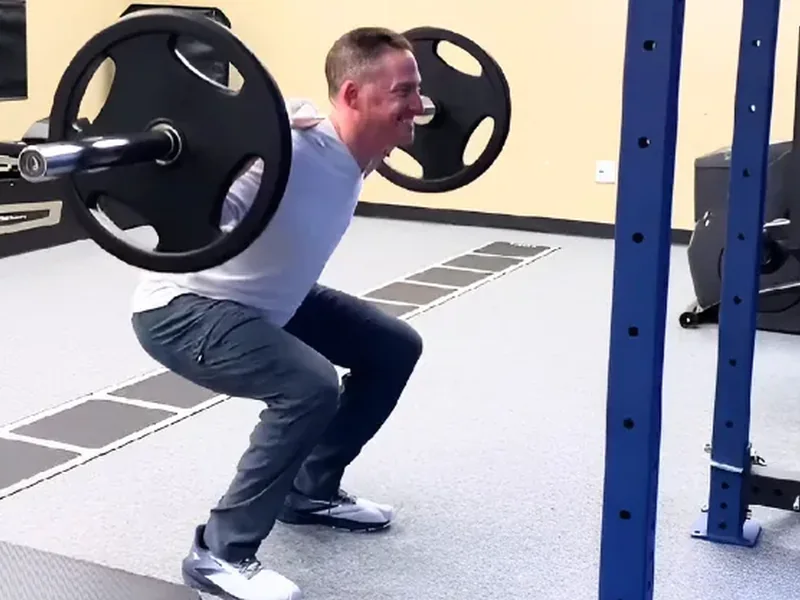
Lift-specific patterns we see in the gym crowd.
If you can name the lift and the rep where it hurts, you are most of the way to a diagnosis.
Shoulder pain pressing
Bench and overhead press pain at the bottom of the range, often with night pain and a cuff or scapular capacity gap behind it.
Low back pain on the pull
Deadlifts and squats where the brace fails, the position changes late in the set, and the back complains the next morning.
Knee pain squatting or pressing
Pain at depth or on the way up, common when volume jumped or when the quad and hip cannot handle the position.
Elbow and forearm pain pulling
Medial elbow or biceps tendon pain that tracks a rise in pulling volume or a switch to heavier chin-ups and rows.
Wrist pain under load
Pain from a bar sitting in an extended wrist, a misaligned grip, or muscling up a weight that was too heavy to control.
A lift you have started avoiding
Working around the movement instead of fixing it is how a two-week issue turns into a year of quietly getting weaker.
A real lifting analysis, then a plan that keeps you training.
This practice runs a weight lifting analysis that takes 60 to 90 minutes, with a remote video option if you would rather film your lifts and review them with us. That is where the useful detail comes from: bar path, how you brace and breathe, tempo, where position changes under fatigue, and which lifts your program has been ramping. We pair it with a physical examination of the painful area and a capacity check of the muscles that were supposed to be doing the work.
Treatment then runs on both sides at once. Hands-on work, joint mobilisation and soft tissue release to settle the irritated tissue and restore the range the lift needs, and progressive loading to close the capacity gap that let it happen. We keep you training wherever we can, by changing range, tempo, grip, stance or lift selection rather than sending you home, and we rebuild the programming logic so the next block does not repeat this one. Our powerlifting-focused coaching is where the heavy end of that lives, and every session is one on one with a licensed physical therapist.
No referral needed in New York for up to 30 days or 10 visits. In network with Medicare and Medicare Advantage, out of network with most other plans, and we submit claims on your behalf. Same-week appointments are usually available at both locations.
Questions about weightlifting injuries.
01 / Are you going to tell me to stop lifting?
02 / What is the weight lifting analysis, and can I do it remotely?
03 / Do I need a referral, and how does insurance work?
04 / Will you make me lift lighter forever?
What our patients say.
"Anthony Fuentes at Greiner is hands down one of the best physical therapists around! Professional, friendly, & super effective at helping you recover and build strength safely."Toni C. · Google review
Schedule Your Appointment
No referral needed in New York. Same-week appointments available at both locations.
Your first visit is a full one-on-one evaluation with a licensed physical therapist: come in, tell us everything, and leave with a plan.
You’re all set.
We’ll reach out within one business day to confirm your appointment. If you need to speak with us sooner, call us directly.