

Neurological Disorder Treatment in the Hamptons
When the nervous system is the injured part, movement stops being automatic. Neurological physical therapy is the work of making it automatic again, one skill at a time, with a licensed physical therapist who stays in the room.
The muscle is usually fine. The instructions are the problem.
In an orthopaedic injury, the tissue is damaged and the brain still knows exactly what to ask of it. In a neurological condition it is the other way round. The muscle is often perfectly capable, but the pathway that recruits it at the right moment, in the right order, at the right size, has been damaged or is degenerating. That is why the movement feels foreign rather than painful, and why stretching and rest do nothing for it.
Nervous systems change in response to practice. Not to being talked at, and not to ten minutes of exercise handed off to somebody else while the therapist covers three other patients. They change in response to a lot of repetitions of a specific, difficult, meaningful task, with somebody skilled watching the quality of each one and adjusting the challenge in real time. Volume and precision are the treatment.
That is the whole argument for how this practice is built. One patient, one licensed physical therapist, the full session, no aides. In neurological rehab that model is not a luxury. It is the mechanism.
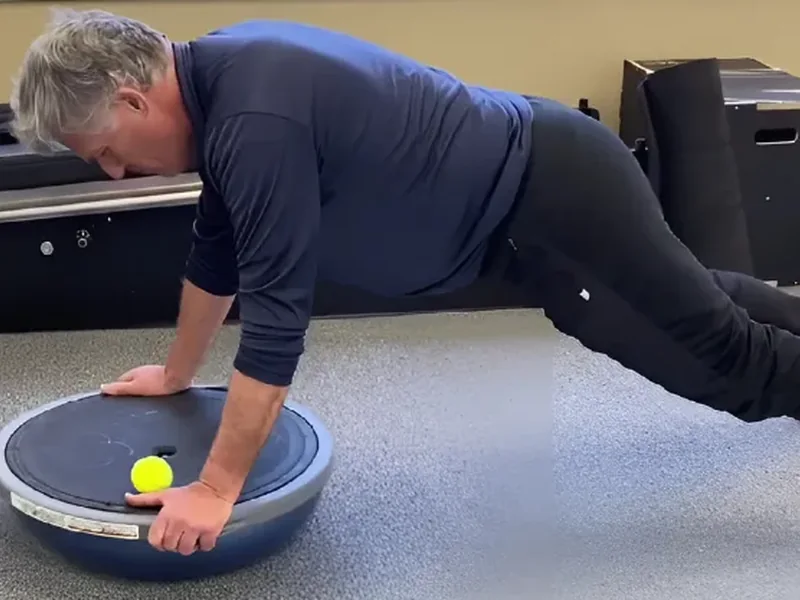
Signs it is time for neurological physical therapy.
You do not have to be newly diagnosed, and you do not have to be at your worst.
Walking has changed
Shorter steps, a wider base, one leg that does not swing through, or a foot that catches on carpet.
Balance you cannot trust
Reaching, turning or walking in the dark now takes concentration, and you have started holding furniture.
Weakness on one side
A limb that will not do what you ask, or that tires far faster than the other one.
Stiffness and involuntary movement
Tone that grips when you try to move quickly, tremor, or a limb that pulls into a pattern.
Fatigue that ends the day early
The energy cost of moving has gone up, so activity you used to take for granted now needs planning.
You were discharged and then plateaued
Progress stopped after inpatient or home care ended. A plateau is often a dosing problem, not a ceiling.
Specific practice, high volume, with your eyes and ours on the quality.
The evaluation is functional before it is anything else. How you stand up, how you walk, how far you can go before quality falls apart, what happens when we add a turn, a head movement or a second task. One of our licensed physical therapists trained through outpatient neurological and subacute rehabilitation rotations, and that is where this style of assessment comes from: measure the real task, then build the plan backwards from it.
Treatment is gait retraining, balance and postural work, progressive strengthening, endurance, and task-specific practice of the things you actually need to do, from a kerb to a staircase to getting off the floor. We will also be honest about scope. We are physical therapists, so we do not provide speech therapy or occupational therapy, and we will coordinate with those providers rather than pretend otherwise. What we do is movement, and we do all of it ourselves.
No referral needed in New York for up to 30 days or 10 visits. In network with Medicare and Medicare Advantage, out of network with most other plans, and we submit claims on your behalf. Same-week appointments are usually available at both locations.
Questions about neurological disorders.
01 / Do I need a referral from my neurologist to start?
02 / Is neurological rehab covered by my insurance?
03 / My relative is past the early recovery window. Is it too late?
04 / How often will we come, and can family sit in?
What our patients say.
"I recently had a life changing accident resulting in a serious spine injury. Post operative care and therapy has been amazing. Great Dr's and staff."Eric T. · Spine injury recovery
Schedule Your Appointment
No referral needed in New York. Same-week appointments available at both locations.
Your first visit is a full one-on-one evaluation with a licensed physical therapist: come in, tell us everything, and leave with a plan.
You’re all set.
We’ll reach out within one business day to confirm your appointment. If you need to speak with us sooner, call us directly.